I Am Not a Fitness Coach, and That’s OK
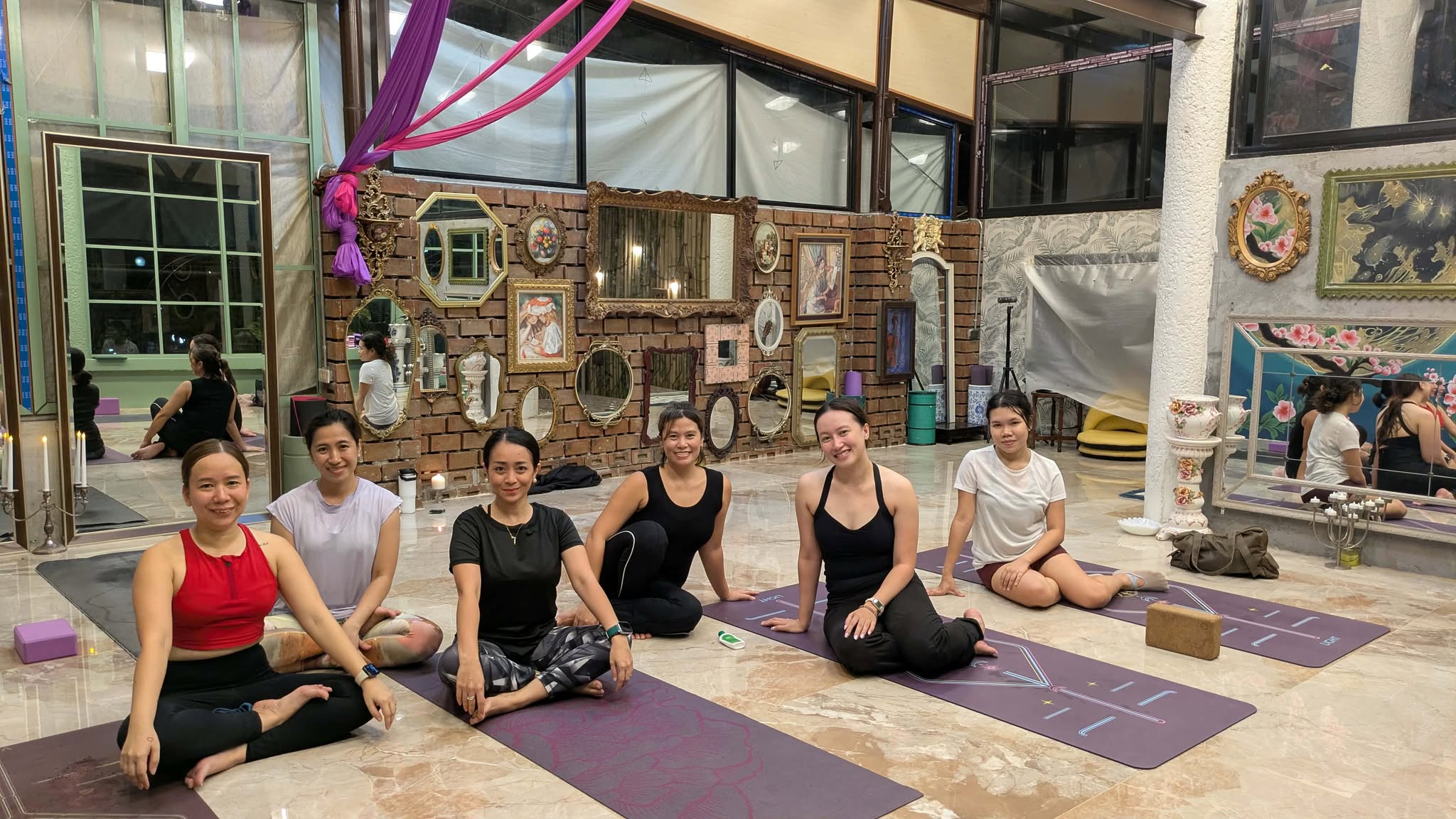
As a yoga teacher, I’ve been asked about fitness many times and even called a fitness coach, but that’s not who I am. While I shouldn’t worry too much about the labels people put on me, I do worry when students come to class expecting yoga to be like a fitness bootcamp.
Sure, yoga can make you stronger, improve your mobility, challenge your balance, and leave you sweating. But that doesn’t mean yoga teachers are fitness coaches.
And honestly? That’s okay.
Somewhere along the way, yoga became increasingly packaged as a workout. Classes started being defined by their intensity: how many calories they burned, how sweaty you got, or how sore you felt the next day.
There’s nothing inherently wrong with wanting a physically challenging yoga practice. Your body is part of your yoga practice, after all. But if we reduce yoga teaching to making people stronger, more flexible, or more physically fit, we miss a much bigger part of what yoga has to offer.
Quick answer: Yoga can be physical exercise, but a yoga teacher's role extends beyond building strength or burning calories. Yoga integrates movement with breath, attention, self-inquiry, and internal awareness. Understanding movement and anatomy makes us responsible teachers, but the core intention remains self-awareness rather than performance.
Yoga and Fitness Are Not the Same Thing
Let’s get one thing out of the way first: yoga can absolutely be exercise.
Depending on the style and how it is practiced, yoga can develop muscular strength and endurance, mobility, balance, coordination, body awareness, and cardiovascular fitness. A challenging Vinyasa class can make you sweat. Holding an arm balance requires strength. Practicing standing poses challenges your legs and stability. Inversions require physical preparation and control.
None of that is a problem.
The problem arises when we assume that because yoga has physical benefits, the job of a yoga teacher is identical to that of a fitness coach. It isn't.
A fitness coach primarily helps someone improve strength, endurance, body composition, athletic performance, or other measurable aspects of physical fitness. A yoga teacher works with the body too, but the practice also integrates breath, attention, awareness, meditation, self-inquiry, and our relationship with our own experience.
The physical practice is important; it just isn't the whole story.
So, What Does a Yoga Teacher Actually Teach?
This is where yoga teachers need to reclaim the depth of what we do. Our job isn't simply to stand at the front of the room and demonstrate increasingly impressive shapes while everyone else tries to copy us.
A yoga teacher helps students pay attention:
- How does this posture feel in your body?
- Where are you holding unnecessary tension?
- Can you breathe comfortably?
- What happens when you slow down?
- Can you notice the difference between sensation and pain?
- Can you recognize when you're forcing yourself?
- Can you stay present when something feels challenging?
- Can you make a conscious choice rather than automatically pushing through?
Those questions don't show up on a fitness tracker, but they are essential to yoga.
A Good Yoga Teacher Should Understand Anatomy and Movement
Now, before someone says, "But yoga isn't exercise!", please don't use that as an excuse to skip anatomy.
If you're teaching physical movement, you need to understand the body. You should have a working knowledge of basic anatomy, joint actions, movement patterns, biomechanics, load, stability, mobility, and common modifications.
- You should understand that bodies are built differently.
- You should offer options rather than assuming there is one "perfect" version of a pose.
- You should know that flexibility is not the same as functional mobility.
- You should understand that a student moving deeply into a posture doesn't necessarily mean they have the strength and control to support that range of motion.
- You should know when something falls outside your scope of practice.
Learning anatomy doesn't turn a yoga teacher into a fitness coach. It makes them a more responsible yoga teacher.
Teaching Movement Is Not the Same as Coaching Fitness
There is a subtle but crucial distinction here. A yoga teacher can teach movements that build strength, use progressive loading, and incorporate mobility work. A yoga teacher can guide a challenging class that leaves everyone sweaty and exhausted.
None of this means the teacher has suddenly become a fitness coach. The difference lies in the framework and intention behind the practice.
Imagine teaching Chaturanga. You could approach it as: "Let's build upper-body strength, do 10 reps."
Or you could explore: "How do you distribute load through your hands and feet? Can you maintain control as you lower? What happens to your breath? Can you modify the posture to maintain stability without collapsing into your shoulders?"
The movement might look similar, but the teaching process is entirely different. One isn't inherently better than the other; they simply serve different goals, and intention is what actually matters.
Your Yoga Class Doesn't Have to Destroy People
Can we please retire the idea that a "good" yoga class is one that leaves everyone sore tomorrow? Soreness is not a measurement of yoga. Neither is sweat, how advanced a pose looks, or how many calories your smartwatch says you burned.
Sometimes the practice is physically demanding; sometimes it is gentle. Sometimes you need to build strength, and sometimes you need to lie on the floor and breathe. Often, the hardest thing you can practice is not doing more.
We live in a culture that constantly tells us to optimize: get stronger, get leaner, get more flexible, work harder, push further. While yoga supports physical health, it also gives us an opportunity to question that constant drive.
- Can I listen to my body instead of overriding it?
- Can I notice ambition without automatically obeying it?
- Can I practice without turning every experience into a performance?
That is a very different conversation from, "How hard can we make this class?"
Yoga Is More Than What the Body Can Do
You can have a beautiful Hanumanasana and still struggle to sit with emotional discomfort. You can balance effortlessly in Crow Pose and still feel lost when life doesn't go according to plan. You can touch your toes while remaining completely disconnected from your body. Conversely, you can struggle with a basic posture while cultivating incredible awareness.
The physical practice gives us a laboratory. We get to observe ourselves, noticing impatience, or catching the urge to compare ourselves when the person on the next mat effortlessly kicks into a handstand. We notice the fear of falling in a headstand, the urge to prove ourselves, and the habit of holding our breath to force a shape.
And hopefully, we learn something meaningful in the process.
That is why I don't want yoga teaching to devolve into fitness instruction with Sanskrit sprinkled on top. There is so much more available.
Challenge Should Serve the Practice
I am not anti-strength, anti-sweat, or anti-challenge. I love helping students build strength and master technically challenging asanas. Watching someone discover their body can do something they previously thought impossible is empowering.
But challenge should serve the practice, not become the entire point of it.
A student doesn't need to be pushed to their maximum every single class. Sometimes they need an appropriate modification; sometimes they need rest; sometimes they need to learn something rather than perform. And sometimes, they need a teacher who can give them permission to stop.
I remember a student once asking me: "Jannah, I know I can fold a little deeper, but I feel discomfort in my belly. Should I just breathe through it?"
Kudos to her for noticing. Knowing her habitual pattern of staying in uncomfortable spaces at the cost of her own well-being, I answered: "Don't breathe through it. You've done enough of that."
That permission can be just as valuable as teaching someone how to nail a handstand.
What Makes a Good Yoga Teacher?
A good yoga teacher understands that they are working with people, not poses.
They understand movement and anatomy, communicate clearly, and offer accessible options. They build an environment where students can ask questions and make mistakes. They know the difference between encouraging someone and pressuring them, and they recognize when a situation requires referral to another health professional.
Most importantly, they help students develop a direct relationship with their own experience rather than creating dependence on the teacher.
Ultimately, yoga isn't supposed to make you better at being your teacher's student, it should help you become more aware of yourself. That’s why svadhyaya (self-reflection) is a foundational pillar of yoga. You have an inner teacher (Antar Guru) holding your innate wisdom. It isn't a mystical fantasy; it is an internal awareness you can access anytime.
"Sā pūrveṣām api guruḥ kālenānavacchedāt" (Yoga Sutra 1.26)
"Unconditioned by time, this inner awareness is the teacher of even the most ancient teachers."
Wear the Right Hat
There is no need to create a false binary between yoga and fitness. You can strength train and practice yoga, run and meditate, love challenging Vinyasa and cherish Restorative yoga. There is room for all of it.
The important thing is clarity of purpose. If you're coaching fitness, own that. If you're teaching yoga, own that too. And if you do both? Even better, just be intentional about which hat you're wearing in the moment.
Yoga doesn't need to justify its value by proving it’s a good workout. It can strengthen the body without reducing the practice to the body alone.
Frequently Asked Questions
Is yoga considered exercise?
Yoga can certainly be exercise depending on the style and intention. It builds muscular endurance, mobility, balance, and coordination, but physical fitness is only one aspect of a broader practice.
What is the difference between a yoga teacher and a fitness coach?
A fitness coach primarily focuses on measurable physical attributes like strength, athletic performance, and body composition. A yoga teacher works with movement while integrating breath, awareness, self-inquiry, and internal experience.
Do yoga teachers need to study anatomy?
Yes. Understanding basic anatomy, biomechanics, joint actions, and movement patterns is essential for teaching movement safely and offering appropriate modifications for different bodies.
Related reading at Upekkha
Deepen your understanding with Upekkha
Explore yoga philosophy, anatomy, and mindful movement in our online 200-hour YTT or foundations immersions.